Cafe Automation: Accounting, Cash Register and Turnkey System
22 January 2026
Read
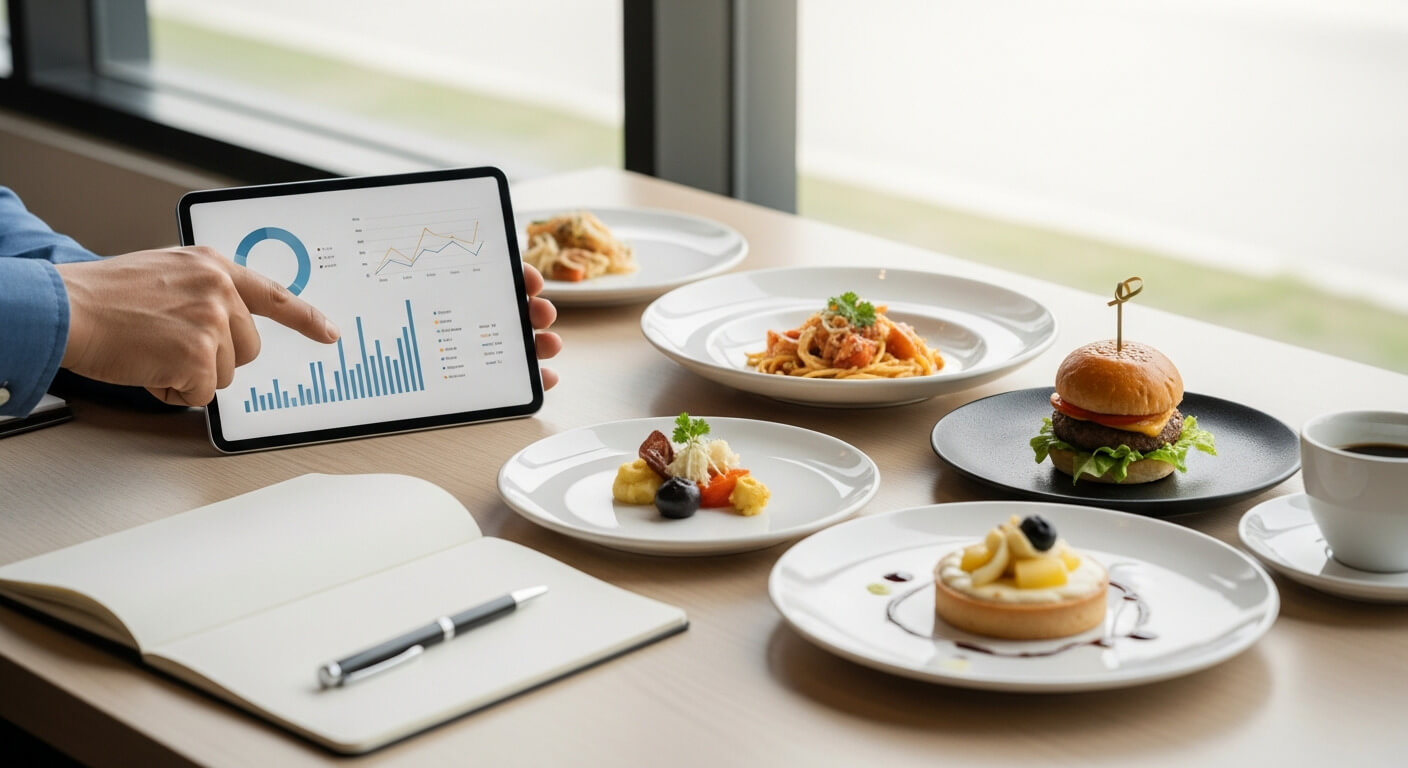
ABC analysis is tool for classifying items by contribution to financial result.
ABC restaurant menu analysis methodology distributes dishes by categories depending on their impact on sales and profit. Group A — items that bring greatest profit with small number of names. Group B — average contribution. Group C — minimal impact with large assortment volume. Restaurant accounting system automatically collects sales data for conducting ABC analysis for any period.
ABC analysis helps identify most popular and profitable menu items through classification by objective parameters. Method based on Pareto principle — 80% of result comes from 20% of efforts. In restaurant context this means small portion of dishes generates main revenue.
Category A includes 10-20% of menu items that bring 70-80% of restaurant profit. These are sales hits with high margin and stable customer demand. Maximum attention paid to such dishes — quality control, recipe stability, staff training in proper presentation.
Group B dishes constitute 30-40% of menu and give 15-20% profit. Average popularity and average margin. These items support menu variety but aren’t foundation of financial result. Require periodic review for possible transfer to category A through presentation improvement or cost adjustment.
Category C dish sales bring only 5-10% profit while occupying 40-50% of menu. Low popularity, low margin, rare orders. Candidates for menu exclusion or radical dish concept rethinking.
ABC analysis conducting process begins with collecting sales data for month or quarter. Detailing needed for each item — sales quantity, revenue, cost, net profit. Analysis period chosen considering business seasonality.
Quarter gives more stable picture than month, smooths random demand spikes. For cafe with pronounced seasonality makes sense to conduct analysis separately for summer and winter periods. Dish popularity structure can change dramatically.
Software for order taking records every sale automatically with cost linkage through recipe cards. Data accumulates without manual entry, calculation accuracy doesn’t depend on human factor.
Classification indicator chosen depending on analysis goals. By revenue — which dishes bring more money. By profit — which give maximum margin. By sales quantity — what’s ordered more often. Optimal to analyze by profit as this is business ultimate goal.
Optimizing menu means concentrating on developing category A dishes and reviewing group C items. Sales hits placed in first menu positions, highlighted visually, actively recommended by waiters. Investments in ingredient quality for category A fully justified.
Which dishes fall into deletion category determined not only by sales numbers. Some group C items support establishment image or complement main dishes. Side dishes rarely sold as standalone item but mandatory as main dish addition.
Increasing profit possible through price adjustment on dishes with low margin but high demand. If item popular among guests, can raise price by 10-15% and track order quantity change. Often demand remains stable while profit grows.
Reducing category B dish costs possible through recipe review or finding profitable suppliers. Replacing expensive ingredients with more affordable alternatives without taste loss transfers item to more profitable category. Important to test changes before mass implementation.
Strategy for group A — maximum stability and quality. Any recipe changes undergo thorough testing. Ingredient stock maintained at level excluding deficit. Staff trained in perfect presentation of these dishes.
Promoting category B items through marketing efforts and special offers. Combos with popular dishes, certain weekday promotions, waiter recommendations. Goal — increase sales quantity to category A level.
Choosing what to do with group C — delete completely or try reformatting. Perhaps dish unpopular due to unsuccessful name, missing menu photo, incorrect presentation. Test changes for 2-3 weeks show whether potential exists.
Food cost control critical for all categories. Product cost share in dish price should remain within 28-35% for food service. Exceeding signals problems with pricing or purchasing.
Analyzing sales manually through tables takes 8-10 work hours for 100-item menu. Automation reduces time to 15-20 minutes for report generation and interpretation. Restasystem generates ABC analysis in few clicks based on accumulated data.
Each item turnover tracked in real time. Owner sees sales dynamics, can notice dish popularity drop at early stage. Quick reaction allows fixing situation before serious profit losses.
Syrve financial accounting connects sales with ingredient purchases and supplier work. You can see how product price change affects specific dish margin. Analytics section shows complete menu item profitability picture.
Analyzing results needs to be regular. Monthly ABC analysis reveals trends, quarterly shows sustainable changes. Seasonal demand fluctuations considered through comparison with last year’s similar periods.
Menu effectiveness increase achieved through systematic analysis-based approach. Keep only profitable and popular dishes in menu, remove outsiders, test novelties. Decisions built on data, not intuition or owner personal preferences. Increasing restaurant profit possible by 15-25% through assortment optimization based on ABC analysis results without increasing guest number or average check.