Syrve Cafe Accounting System: Complete Feature Overview and Real Cases
30 January 2026
Read

Cafe software solves business control problem in owner’s absence. Manual accounting takes 15-20 hours per week and gives error margin up to 10-15% due to human factor. Without automation impossible to know precisely dish costs, menu item profitability, actual warehouse inventory.
Accounting system connects all establishment processes into single chain. Cash register records sales, warehouse writes off ingredients, reports form automatically. Cafe software eliminates manual data transfer between operations and shows financial result in real time.
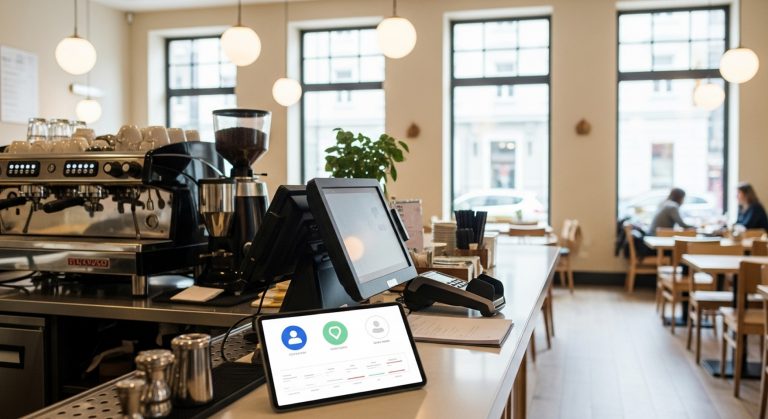
Restaurant accounting management is based on cash register and warehouse integration. Waiter takes order on tablet — information reaches kitchen, products written off by recipe cards, receipt formed. Each operation recorded without manager participation.
Warehouse inventory accounting is kept automatically. Delivery received — goods added to database with invoice linkage. Dish prepared — ingredients written off according to recipe card. You can see what’s running out, when to order next batch.
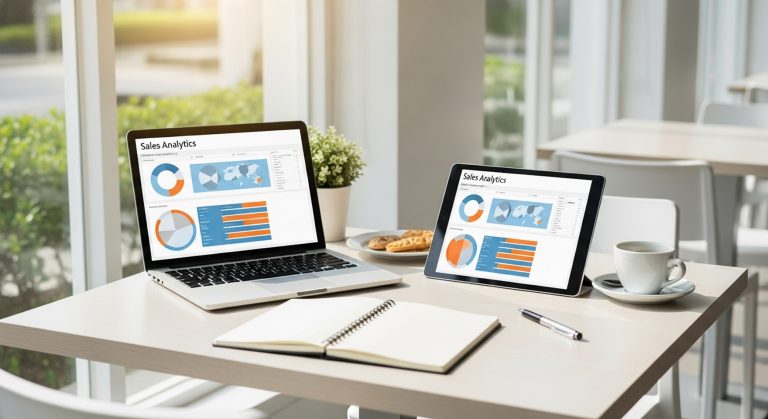
Financial accounting management simplifies through automatic report generation. Revenue by shifts, days, weeks. Sales structure by menu categories. Comparison with past periods shows growth or decline dynamics.
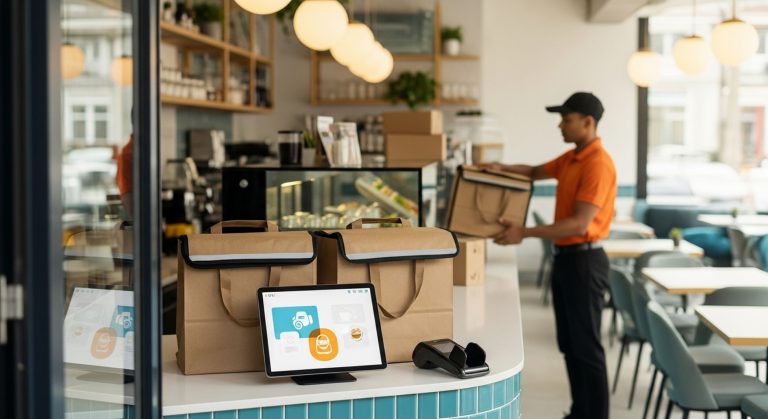
Working with orders speeds up when integrating delivery. Orders from website, app, aggregators enter single interface. Order delivery program distributes them among couriers considering addresses and workload.
Cafe automation includes several interconnected blocks. POS systems process hall sales. Warehouse module controls product movement. CRM manages client database and loyalty programs.
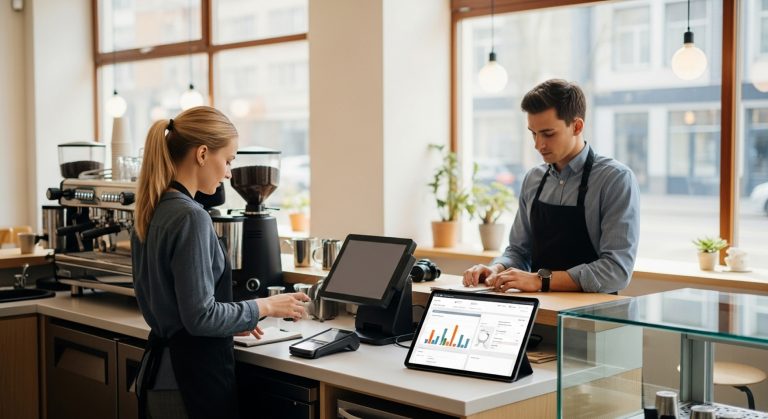
Analytics system provides data for management decisions. Which items sell better, when is peak load, which staff works faster. Statistics can be analyzed by any slices — from specific waiter to dish category.
Cafe automation includes integration with accounting and loyalty, video surveillance, delivery aggregators. More connections between systems mean less manual information transfer.
Tablet accounting system provides operation mobility. Waiter takes orders at table, manager sees sales from smartphone being outside establishment. Data synchronizes in real time between all devices.
Cafe and restaurant software is chosen for business format. Coffee shop focuses on quick sales and minimal warehouse. Restaurant requires complex ingredient accounting, hall management, table booking.
Work format determines necessary module set. Establishment with hall only manages with basic functionality. Added delivery — need integration with courier services. Opened second location — require centralized network management.
System work effectiveness is evaluated by operation processing speed. Report should form in seconds, not minutes. Interface built so most actions performed in 2-3 clicks without long menu chains.
Settings determine system flexibility. Can you change staff access rights, configure unique reports, adapt interface for establishment specifics. Rigid systems without customization capability create scaling problems.
Software functionality expands through external service connection. Online booking, electronic menu on website, client SMS mailings. Each integration adds new guest interaction channel.
Cafe accounting software must transfer data to accounting systems automatically. Primary document export, inventory synchronization, tax report formation without manual number transfer between platforms.
Loyalty program module accumulates each client’s purchase history. What they order more often, when last visited, how much spent per month. This data used for personalized offers and returning departed guests.
Can track not only sales but staff actions. Who opened shift, how many orders waiter processed, were there cancellations or dish returns. Objective work metrics replace subjective assessments.
Implementing automation begins with basic parameter setup. Menu loading with prices and dish composition, recipe card creation for automatic ingredient write-offs, staff access rights setup. Medium-sized establishment takes 3-5 days.
Most restaurant software offers trial period for functionality check. Can evaluate interface convenience, work speed, technical support quality before final choice. Restasystem gives time for system adaptation to real restaurant work processes.
Establishment transfers to new system in stages. First cash register launches, then warehouse connects, then analytics and integrations added. Parallel work of old and new systems allows avoiding operation stops.
Restaurant work specifics considered during setup. Peak service hours, seasonal demand fluctuations, menu features — all this affects module and report configuration.
Syrve for cafe gives measurable results in 2-3 months of work. Shortage reduction by 8-12%, staff time savings on routine operations, average check growth through loyalty programs.
Your establishment profitability grows through precise cost control and process optimization. You can see which dishes unprofitable, where staff excess, when to run promotions for increasing load in weak hours.
Purchase optimization builds on actual product consumption analysis. No need to keep excess inventory or face popular ingredient deficit. Orders formed based on sales statistics considering expiration dates.
Restaurant business management transitions from intuitive to digital. Decisions made based on data, not assumptions. Every menu change, price, work schedule confirmed by past period result analysis.