Cafe POS System with Kitchen Screen: Cash Register, Kitchen and Staff in One Connection
16 March 2026
Read
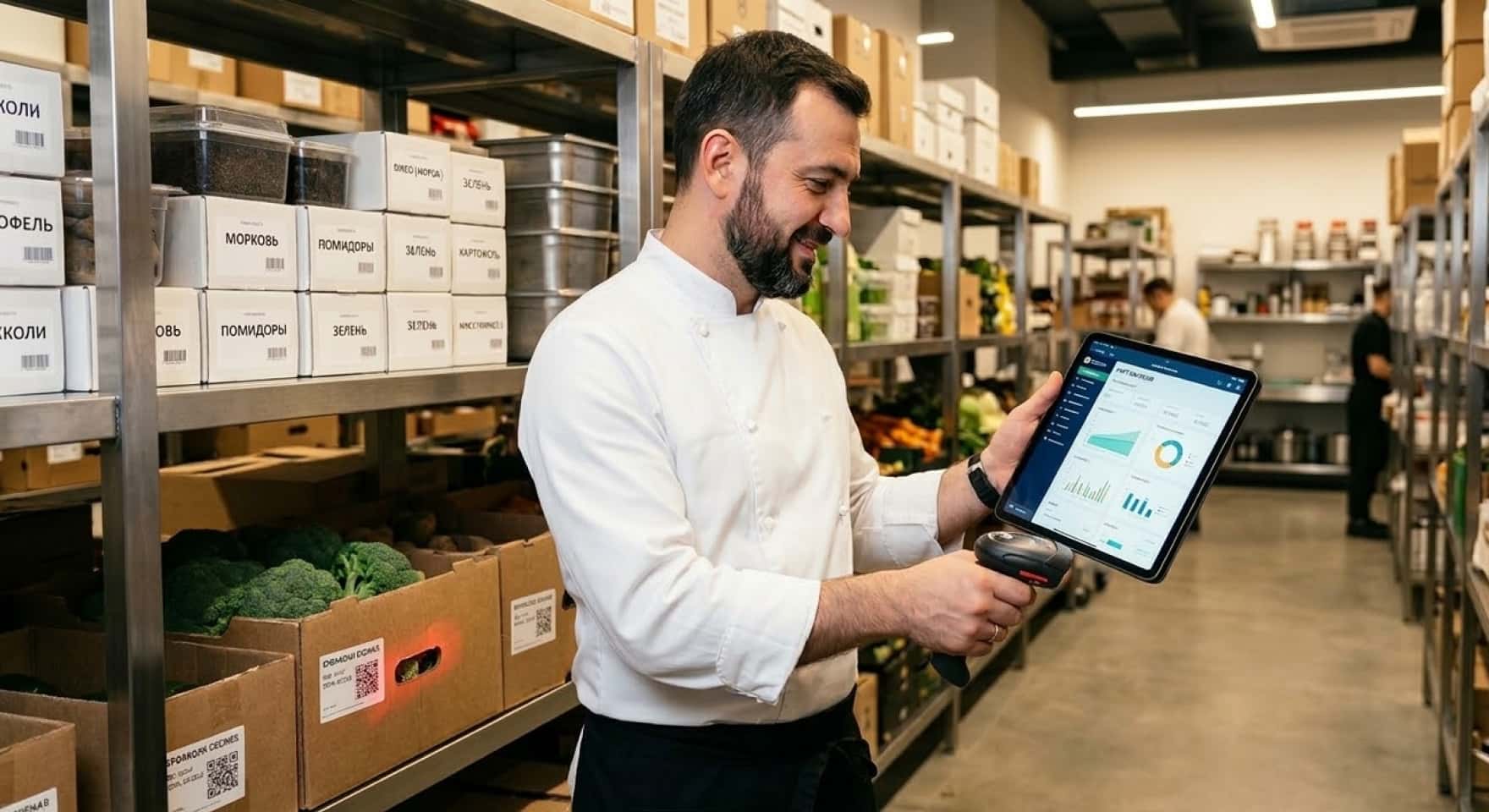
Warehouse accounting in food service isn’t boring bookkeeping. It’s money leaving daily: through kitchen cross-sorting, inaccurate supplier requests, receiving errors and losses nobody records. According to industry research, restaurants lose 5 to 15% of turnover precisely on warehouse problems. This article examines how Syrve warehouse accounting automation works and what it really gives establishment.
In small cafe everything seems manageable. Chef remembers what’s left in freezer. Administrator records arrivals in notebook. Weekly inventory — “by eye”.
But opening second hall or adding 20 menu items — system crumbles. Chef doesn’t remember, storekeeper can’t keep up, and notebook doesn’t match cash register. Result: Friday shortages, undocumented write-offs and feeling money draining, but unclear where.
This is where real value of warehouse accounting automation software begins: not as checkbox tool, but as working control mechanism. Every arrival, expense, write-off — recorded at event moment, not retroactively.
Syrve writes off ingredients automatically — by recipe cards — at dish sale moment. Sold burger: system itself subtracted from balances bun, patty, lettuce leaves and sauce. No manual entry needed.
This is key difference from spreadsheets. In Excel warehouse balances software doesn’t update itself — someone must do it. In Syrve balance current every minute. Chef sees anytime how much really stands on shelf — not yesterday, but now.
Plus — minimum balance per item. When meat falls below set threshold, system generates warning or supplier request automatically. Automatic supplier order is standard function even small establishments use.
Monthly restaurant inventory is stress for entire team. Count manually, then reconcile, then find who’s guilty of discrepancy. Usually takes half day and ends with spoiled mood.
Syrve allows conducting inventory by barcode. Employee scans items — system itself compares fact with accounting balances and shows discrepancies. No need to recount twice. No need to argue.
Important point: goods and warehouse accounting in system conducted by storage locations. Bar, kitchen, pantry — separately. This helps quickly find where exactly discrepancy arose, not search needle in haystack.
Without automation dish cost calculated rarely — usually at menu launch then forgotten. Supplier prices grow, recipes change, and margin imperceptibly falls.
In Syrve cafe and restaurant automation systems build cost report in one click. Visible what was input, what written off, what difference between normative and actual consumption. If cook puts more than norm — it’s visible. Not month later at inventory, but during day.
Restaurant product write-off also recorded through acts — with reason, responsible person and date. No “went somewhere”. Cafe inventory management becomes transparent process.
Configuration for specific establishment takes up to 5 days. This is time for nomenclature entry, recipe cards, storage location configuration and cash register connection. If menu large — may take week.
Most employees figure out basic functions in 2–3 days. Storekeeper needs to master receiving and inventory, chef — balance control and consumption norms. For this Restasystem has Syrve software training — both introductory and specific modules.
Restaurant purchase automation, cross-sorting control, correct supplier return accounting — all this requires debugging time. But already after month of work establishment begins seeing real warehouse picture. This is more valuable than any manually compiled report.
Warehouse accounting in food service isn’t about order for order’s sake. It’s about money staying in business, not going to losses and errors. Syrve gives specific tool: automatic write-off by recipe cards, real-time balance accounting, inventory without manual recounting and cost control per dish. System pays back in 4–6 months — not because presentation says so, but because losses nobody counted before stop. If want to understand how this works specifically for your establishment format — Restasystem can provide consultation and demo without obligations.