Cafe Automation: Accounting, Cash Register and Turnkey System
22 January 2026
Read
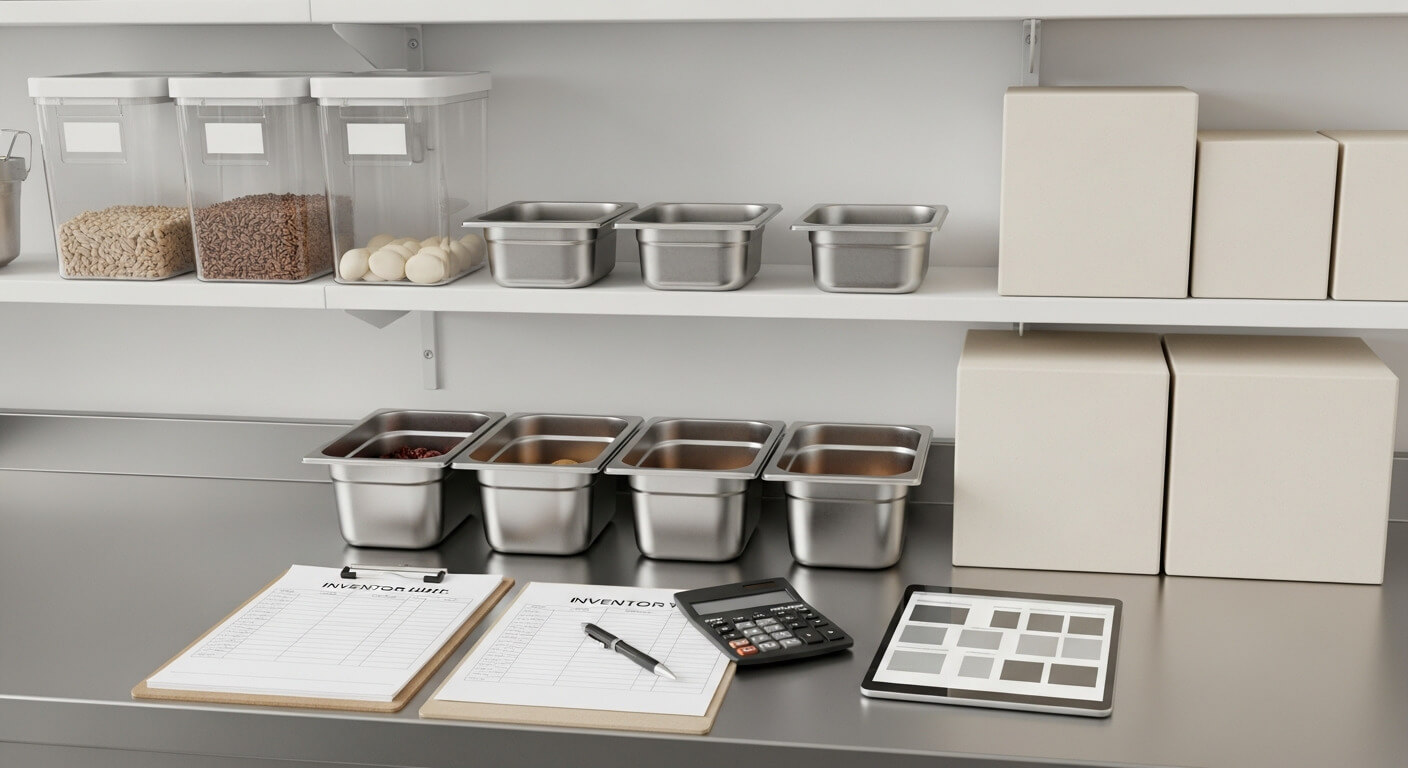
Inventory reveals the real state of stock. Cafe owners often discover 10-15% discrepancies between records and actual inventory. Shortages, product spoilage, write-off errors — all this surfaces when compiling records.
Inventory should be conducted regularly, not just before inspections. The more often you control inventory, the faster you find problems. Warehouse accounting cafe automates the process and reduces counting time from several hours to 20-30 minutes.
Full count covers all goods in the warehouse, kitchen, and bar. Conducted quarterly or when changing the materially responsible person. Products, beverages, inventory, and preparations are checked.
A separate type is selective checking of critical items. Alcohol, coffee, meat are counted more often, sometimes daily. These goods are more expensive and sell faster, control here is stricter.
Unplanned inventory is triggered when theft is suspected or serious accounting discrepancies exist. If the program shows one data but physically there are fewer products — the need for urgent verification is obvious.
It’s worth starting from the establishment’s opening. The first procedure records starting inventory, from which further consumption goes. Without this, it’s impossible to track product movement correctly.
Counting requires preparation. Appoint a commission of several employees to exclude manipulation by materially responsible persons, at least two people count, the third records.
Verification should be conducted after shift closing or during non-working hours. During sales, accurate counting is impossible — goods constantly move between warehouse and kitchen.
Expiration dates are checked in the usual manner parallel to quantity counting. Expired products are written off as a separate line. Food products require special attention to dates — dairy products, greens, pastries spoil quickly.
Results are entered into a table or special form. Record name, unit of measurement, accounting quantity, actual quantity, difference. Correcting records retroactively is prohibited — this is a violation.
Cafe accounting system allows conducting inventory electronically. You scan the product — the program pulls the accounting balance, you enter the actual. The difference is calculated automatically.
Automation simplifies inventory conduct many times over. The POS system stores data for each item, knows movement since the last delivery.
The system writes off products when preparing dishes according to recipe cards. The waiter processes a latte order — the program subtracts milk, coffee, syrup. Theoretical consumption is always under control.
Discrepancy analysis reveals problem areas. If the menu should use 10 liters of milk but actually used 12 — the problem is in preparation or theft. Staff may pour more than normal or take goods independently.
Integration method with supplier invoices saves time. You upload a document from the supplier — the system adds goods to the warehouse automatically. No need to select each item manually.
Inventory management becomes transparent. You see what’s running out, what needs ordering, what’s sitting without movement. Purchase decisions are made based on facts, not guesses.
Discrepancies always exist. Normal indicator — up to 2-3% of turnover. Higher — need to investigate causes and control processes more strictly.
Avoiding write-offs is impossible. Products spoil, glass breaks, part of goods is lost during processing. Proper accounting considers natural losses and separates them from theft or errors.
Saving inventory results is mandatory. Documents are stored for at least three years for inspections. Electronic accounting simplifies archiving — all data in the system, access with a click.
Syrve accounting integrates with accounting software. Inventory results are transmitted directly, data duplication is excluded. Setting up the connection takes one day, then everything works automatically.
Profit directly depends on accounting accuracy. 5% underaccounting means losing a significant part of margin. For a coffee shop or small cafe this is critical — the difference between profit and loss can be exactly in these percentages.
Skipping items is a typical problem. An employee forgets about stock in the utility room or preparations in the refrigerator. The kitchen has several storage zones, everything needs checking.
Counting during establishment operation gives distorted data. Goods move, something sold, something is being prepared. Accuracy in such conditions is impossible.
Lack of documentation creates problems during inspections. Verbal counting has no legal force. The system needs recorded data to adjust inventory.
Ignoring expiration dates leads to fines and reputational risks. Products with expired dates should be written off immediately, not counted as good goods.
Restasystem works with food establishments of any format. Coffee shops, restaurants, chain locations — everywhere the need for accurate accounting is equally important. The first inventory in the program takes time for training. The second is already three times faster.
Conducting inventory regularly is the basis of business control. Goods in the warehouse should match accounting records, otherwise you’re losing money.
Process automation through POS system reduces labor and increases accuracy. Manual accounting is possible, but it’s long and prone to errors. Modern solutions make the task simpler and faster.
Inventory in a cafe is not a formality for inspections, but a management tool. Regular control helps avoid shortages, order goods on time, control staff, and preserve profits.