Syrve Cafe Accounting System: Complete Feature Overview and Real Cases
30 January 2026
Read
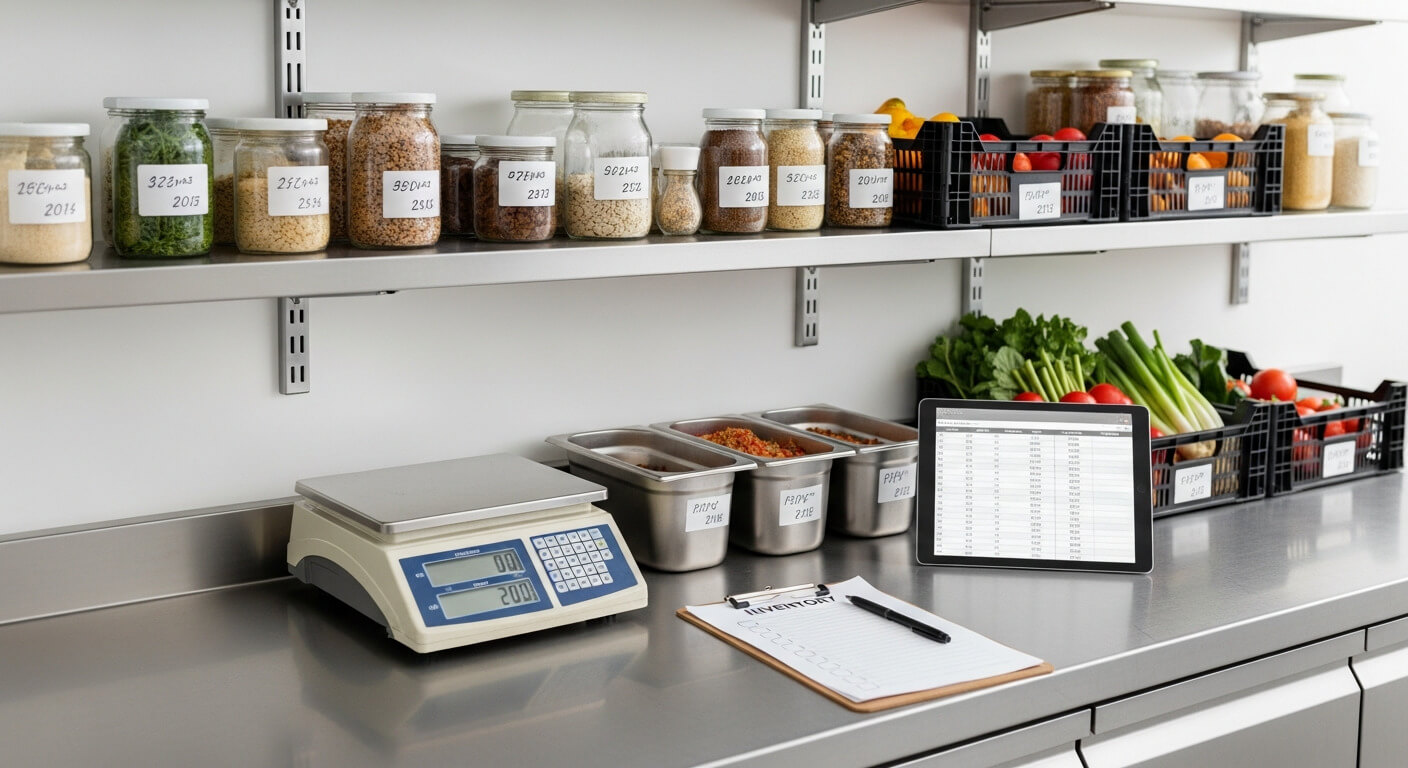
Product accounting in a restaurant determines business profitability. Without accurate inventory control, an establishment loses up to 10-15% of revenue monthly. Shortages, spoilage, and write-off errors eat away at margins unnoticed.
Owners often learn about problems after the fact. When inventory shows discrepancies in thousands of items. Warehouse accounting in a restaurant helps see product movement in real time and prevent losses before they occur.
The inventory control process begins with choosing a method. Each approach affects data accuracy and staff labor costs.
Manual accounting requires daily inventory counts. The manager fills out spreadsheets, reconciles invoices, enters data into journals. A medium-sized establishment takes 2-3 hours daily. Errors are inevitable with such workload.
Automated accounting systems synchronize the cash register, warehouse, and kitchen. The program writes off ingredients according to recipe cards automatically. The chef prepares a dish — the system recalculates inventory without human participation.
The combined approach combines software control of basic items with manual verification of critical goods. Alcohol for the bar, meat, seafood are checked separately. Other expenses are tracked by software.
Product consumption often doesn’t match actual usage due to typical miscalculations. Understanding the causes helps build the right process.
Lack of dish costing leads to uncontrolled write-offs. An employee adds ingredients “by eye,” actual cost differs from calculated by 15-20%. Consumption standards exist only on paper.
Ignoring expiration dates creates write-offs of expired products. Lack of FIFO inventory rotation means old goods go to waste instead of being sold.
Unaccounted losses during raw material preparation distort the picture. Meat loses up to 30% of mass during processing, vegetables during cleaning — 10-25%. Without accounting for natural shrinkage, the accounting balance diverges from physical.
Manually tracking semi-finished products is practically impossible. Preparations move between departments, used in different dishes. Without automation, the movement chain is lost.
Accurate inventory control is built on several principles. Following them reduces losses and simplifies inventory management.
Planning purchases based on sales data prevents overstocking. Demand analysis for previous periods shows real product needs. Seasonality affects the menu — salads sell more in summer, demand drops 40% in winter.
Control over delivery dates and expiration dates should be automated. The accounting system tracks hundreds of items more easily than staff manually.
Write-offs occur at the moment of selling a finished dish. Automation in the restaurant business allows linking the cash receipt to the recipe card. A guest orders pasta — the program writes off 200 grams of spaghetti, 50 grams of sauce, 30 grams of cheese.
Inventory is conducted regularly. The key principle is dividing goods by categories. Expensive items are checked weekly, general assortment — monthly.
The cost of a dish consists of ingredient costs, preparation expenses, serving, and service. Without understanding real costs, it’s impossible to determine markup percentage.
Menu costing accounts for all components. A meat dish includes the cost of the main product, side dish, sauce, spices. Additionally, losses during heat treatment are included.
Financial accounting is not enough for operational management. Accounting records facts retrospectively. Restaurant management requires current data here and now.
Margin by category helps manage assortment. Drinks give 70-80% margin, hot dishes — 50-60%. Understanding revenue structure allows adjusting the menu toward profitable items.
Average check depends on correct write-offs and pricing. Understating costs leads to losses with apparent profitability.
Optimization of accounting processes begins with choosing a software solution. Modern systems cover all stages of product movement from receiving delivery to final sale.
Syrve restaurant software synchronizes all control points. Receiving goods at the warehouse, transferring products to the kitchen, write-offs during sales — all operations are recorded automatically.
Reports are generated with one click. Product movement for a day, week, month. ABC analysis shows which items bring in main revenue. XYZ analysis evaluates demand stability.
Integration with suppliers simplifies payment and receiving. Invoices are loaded into the system directly, amounts and quantities don’t need to be entered manually.
Tracking consumption by shifts and specific employees helps identify problem areas. If shortages occur at certain hours — the cause is in the work process of that shift.
Restasystem works with establishments of any format. Setting up automation processes takes from a week. Practice shows that most restaurants reduce losses by 8-12% in the first month of working with the program.
Inventory accounting in the restaurant business directly determines profit. Controlling product movement from delivery to guest minimizes losses and increases margin.
Automation of accounting processes saves manager time and reduces human factor influence. Your business efficiency grows when you see the real inventory picture at any moment.
Controlling each item manually is impossible. Remember that potential loss from shortages and spoilage exceeds system implementation costs. Properly built accounting is the foundation of a profitable establishment.