Cafe POS System with Kitchen Screen: Cash Register, Kitchen and Staff in One Connection
16 March 2026
Read
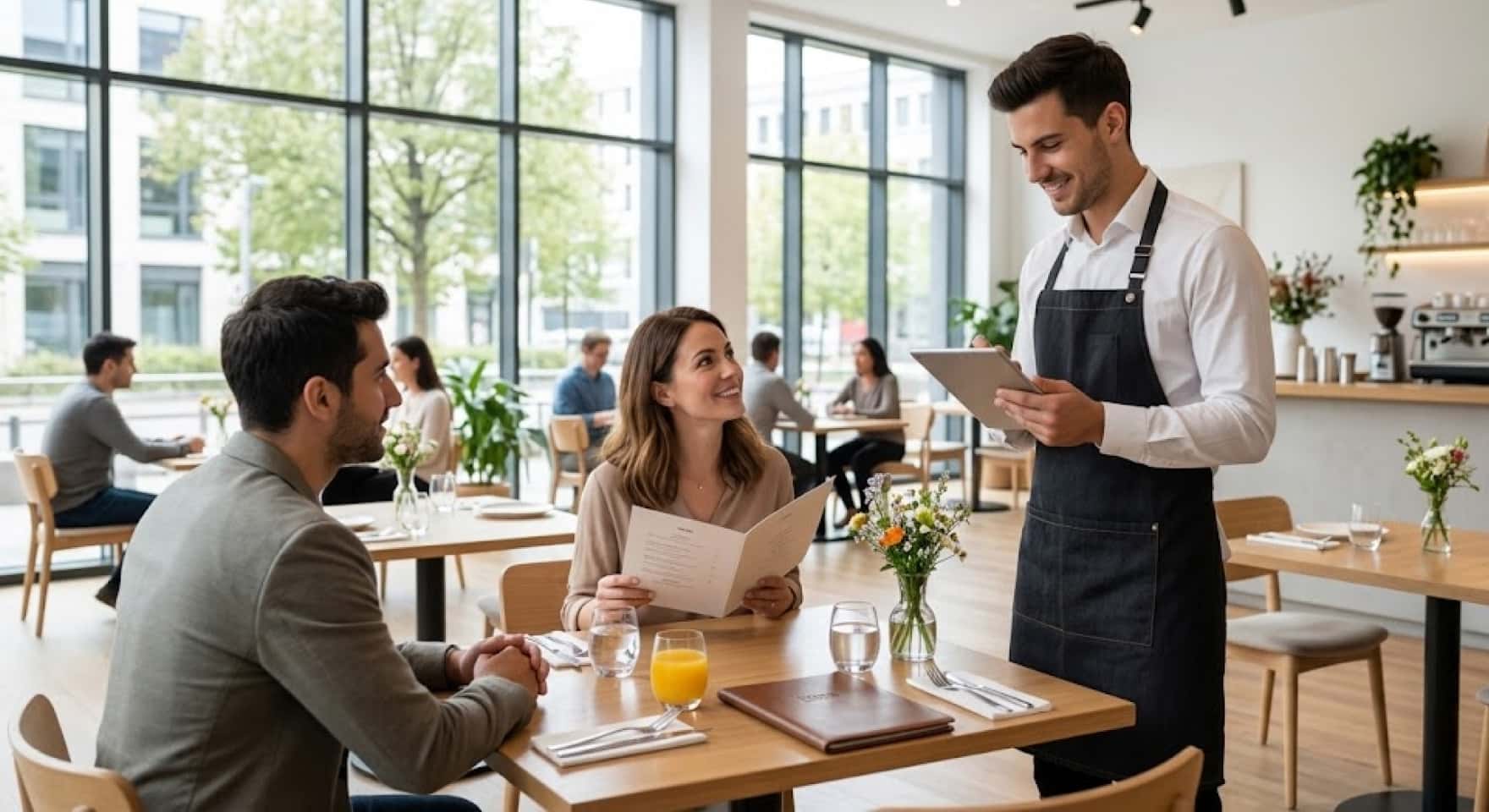
Waiter application — not trendy feature but working tool that changes entire hall pace. Waiter with tablet takes order at table and sends to kitchen in 20 seconds. Without walking to stationary terminal. Without verbal transmission. Without “wait, I’ll write now”. Waiter errors drop multiple times — not because staff became better but because system doesn’t allow mistakes. This article examines how SyrveWaiter works, what it gives hall and what to pay attention to at launch.
SyrveWaiter application installed on regular Android smartphone or tablet. Waiter logs in with own login, sees hall layout, selects table and starts taking order. Menu structured by categories — finding item takes 2–3 seconds.
Table order reception software records every item with modifiers: no onions, medium rare, sauce separately. All this goes to kitchen in exact form — no need to re-ask cooks, waiter needn’t remember. Kitchen order transfer happens automatically at confirmation moment.
Waiter software also supports order splitting by guests right at table. Convenient for corporates and companies where everyone wants to pay separately — waiter doesn’t manually split check.
Before app implementation waiter averages 4–6 extra walks per shift just to enter order in terminal. With busy hall this is 20–30 minutes lost time. Not critical — until peak hour starts.
Restaurant service speed with mobile app grows through parallel work: one waiter takes order, second already carries dishes, third punches bill — and nobody stands in terminal queue. Service time control visible in reports: system records how much passed from order reception to serving.
One nuance worth considering: first 2–3 days staff works slower than usual — adapting to interface. This is normal. By first week end pace recovers, and by second week end — noticeably exceeds previous.
Restaurant hall app in Syrve can prompt. Waiter selected steak — system suggests suitable wine or sauce. Not intrusively, just prompt pops up in waiter menu.
Average check waiter raises not by pressure but timely provided information. If guest ordered pasta and waiter knows signature bread goes with it — will suggest. Without prompt — will forget, especially during busy shift.
Restaurant accounting system records which waiters made how many upsells per shift. This is foundation for restaurant staff motivation — not in words but with specific numbers per employee.
Hall staff control in Syrve — not surveillance but transparency. Visible who opened table, who took order, who conducted item cancellation and when. If waiter regularly deletes items after serving — this is signal worth examining.
Waiter work time accounting conducted through shift login and logout system right in app. Timesheet generated automatically — without paper logs and disputes about who came when. Accountant receives ready data, not conversation results with administrator.
Important: access rights configured separately for each role. Waiter sees only own — table, order, bill. Discounts and cancellations require manager confirmation. This removes large abuse class without conflicts and surveillance.
Syrve mobile app for waiters pays back in 4–6 months — through service speed growth, error reduction and upsell control. Not abstractly but through specific indicators: table turnover, average check, cancellation quantity. See how Syrve mobile app looks in work and select configuration for your hall — possible at Restasystem consultation.