Fiscalization in an establishment: PRRO, online cash register, and POS system integration
28 September 2026
Read
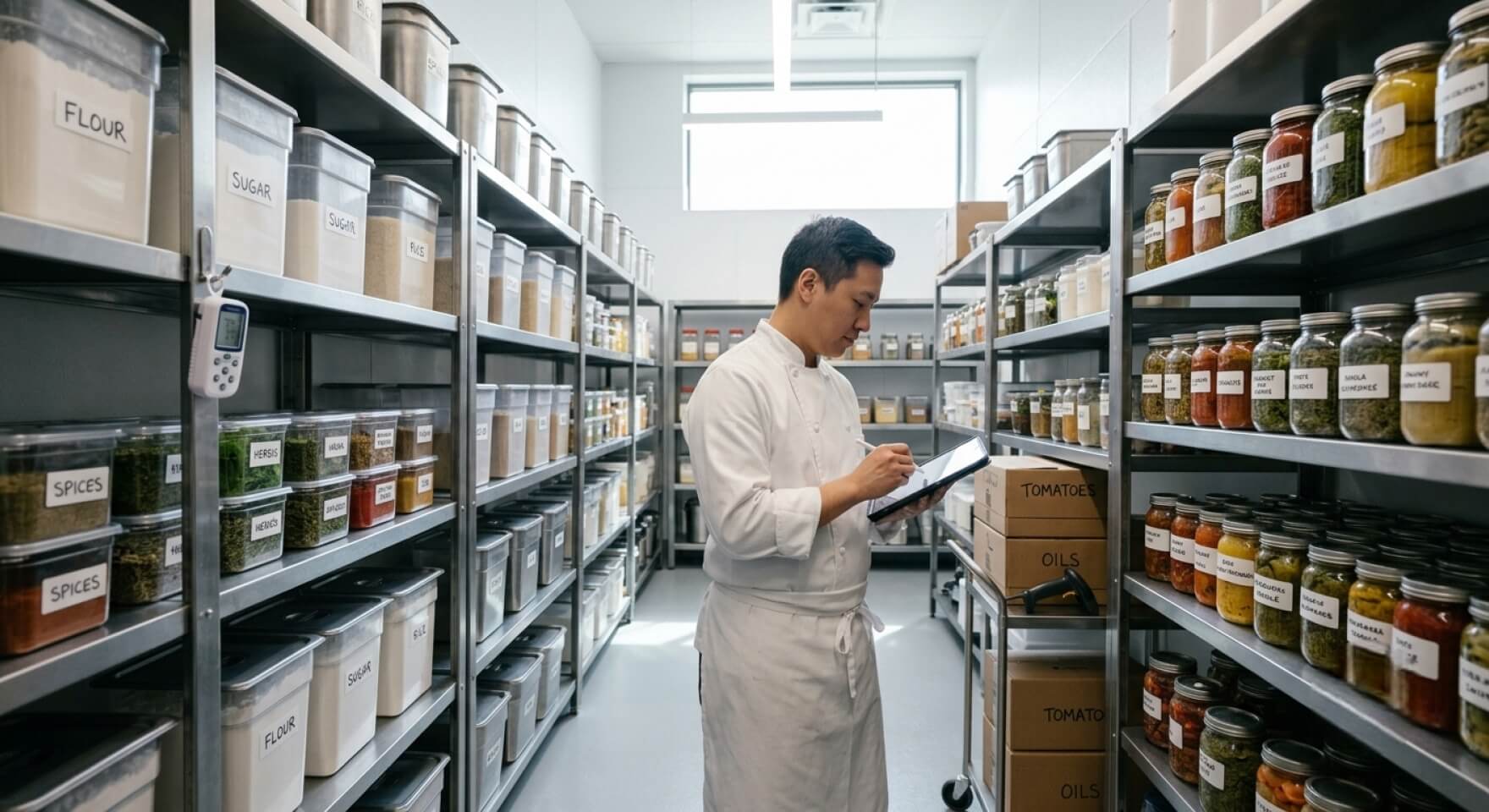
Warehouse chaos eats up 3% to 7% of an establishment’s turnover every month. Expired raw materials, “blind” purchases, inflated food costs, and uncontrolled write-offs kill profits faster than a lack of guests. For a business to generate money rather than losses, strict control of product movements is required — from receiving an invoice from a supplier to serving a dish. The solution to this problem lies in the complete digitization of processes, where a modern restaurant accounting system automatically calculates the cost of each item, records inventory balances, and signals any deviations.
Many newcomers to the restaurant business confuse concepts. Tax and accounting records are oriented towards reporting to the state: paying fees, calculating income tax, working with cash registers, and complying with the requirements of the taxation system. But to manage profitability and see the real performance of the business, the owner needs deep internal management tools.
Proper inventory accounting shows the actual cost of each dish in real-time. Without this, financial accounting turns into guesswork, and the stability of the business is compromised. Detailed accounting allows you to control the company’s fixed costs (such as rent or services) in a single P&L report along with raw material costs, creating transparency for the owner.
A notebook or Excel spreadsheets are crutches that only work until the first serious inventory check. When chefs keep records on pieces of paper, the accountant spends weeks making ends meet. Due to the human factor, invoices get lost, and primary documents are always missing.
A cloud-based warehouse accounting solution works differently: data is synchronized instantly. If you analyze the top 5 programs for inventory automation, it becomes obvious that digital software speeds up document processing tenfold. Less routine and accountant errors mean more accurate calculation of financial results. Moreover, modern restaurant warehouse equipment (barcode scanners, data collection terminals) integrates directly with the software.
To organize accounting professionally, you must rely on standards recognized in the catering industry. The specifics of accounting in HoReCa require the implementation of the following methods:
From Restasystem’s implementation practice: restaurants that switch to strict digital control reduce their food cost by 2-4% in the very first weeks of operation. Professional inventory automation in cafes and restaurants physically eliminates the “human factor” and opportunities for fraud.
Electronic inventory forms speed up scheduled checks. ABC menu analysis instantly identifies dishes that generate profit and those that merely freeze funds in the warehouse. Thanks to KDS screens in the kitchen, information from the hall flies to the chefs in a second, and inventory accounting and sales are synchronized without delays.
Choosing a system and launching it correctly is the foundation for successful business development. The implementation of the Syrve ecosystem follows a clear algorithm:
The most common mistakes in accounting for restaurants and cafes are ignoring regular inventories and trying to combine management metrics with purely tax accounting in one database without proper segregation of rights.
Some entrepreneurs, when opening a cafe, try to save money and choose cheap inventory software that does not support complex operations. This especially applies to aspects like alcohol sales accounting, which requires strict compliance with cash discipline so the state can correctly register sales.
Another trap is chaos in primary documentation. If an invoice is not entered on time, negative balances arise, the prime cost is distorted, and restaurant accounting turns into a fiction. Companies where financial accounting is handled by a qualified specialist using a powerful platform like Syrve always have an up-to-date picture of sales, expenses, and net profit of the business. Keeping accounting records becomes easier, and managing the business becomes safer.