Bakery and pastry shop automation: production, semi-finished products, write-offs
19 September 2026
Read
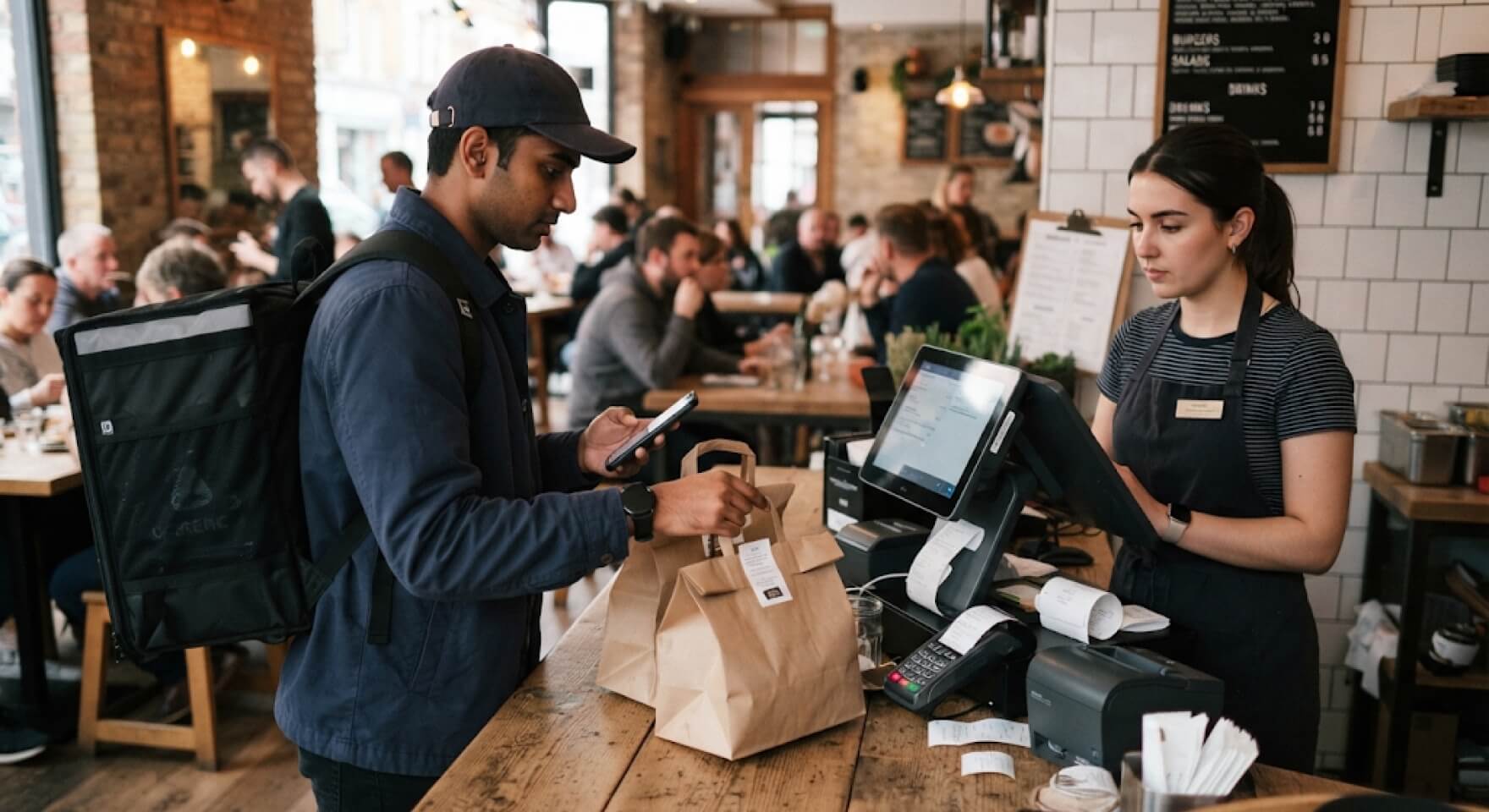
Giving 30-35% of your revenue to aggregators is a direct path to a cash gap when food costs are constantly rising. In-house delivery allows you to keep your margin, but requires strict operational control. Manual route planning in messengers and cash reconciliation in spreadsheets quickly lead to chaos. Food gets cold, clients go to competitors, and money is lost during calculations. Professional courier delivery automation and end-to-end accounting of courier work are guaranteed to solve this problem. They turn a complex logistics process into a transparent business model where the owner controls every kilometer and every penny. According to integrator statistics, a systemic approach helps reduce operating costs by at least 15% in the first months of operation.
Completely abandoning a third-party platform at the start is quite risky. Aggregators provide stable traffic and bring in new clients. The optimal model is a hybrid one, where the restaurant gradually transfers its loyal audience to its own website or app, offering significant bonuses for direct orders. If you decide to combine orders from aggregators in a single accounting system, staff will stop getting confused across multiple active tablets. Maintaining an in-house delivery service becomes more profitable when the daily number of orders consistently exceeds the 30-40 delivery mark. That’s when fixed salary costs outweigh the commissions you constantly pay to services. In-house couriers start generating real profit.
A successful launch of restaurant delivery always starts with logistics. Delivering hot pizza to the other side of the city is economically unfeasible. The optimal travel time should not exceed 45 minutes. To avoid losses, the city is strictly divided into zones: green (up to 3 km), yellow (up to 5 km), and red (over 5 km). A reliable courier program automatically determines the zone by the entered address and blocks dispatches outside the profitability radius. Delivery quality directly depends on temperature control. Professional thermal bags retain heat for a long time, but do not save you from city traffic jams. Optimize your logistics.
Free delivery is a marketing myth. Someone always pays for it. Either the client or the margin of your establishment. To maintain the break-even point, restaurants set up dynamic pricing. For example, in the green zone, the service is free for orders over 500 UAH, in the yellow zone — over 800 UAH. If the check is smaller, the guest pays for the service themselves. This effectively motivates the audience to order more. Some establishments choose a fixed cost per mileage. The main rule is to make the financial calculation absolutely transparent to the client at the cart checkout stage.
Friday evening ruthlessly tests the strength of any sales channel. High-quality software for courier services helps analyze order heat maps. Knowing the exact volumes of past weeks, the manager puts the right number of people on shift. One courier on their own transport makes an average of 2-3 deliveries per hour. If 30 dispatches per hour are expected during peak times, you need a minimum of 10 drivers. Local outsourcing or backup staff effectively save the situation during abnormal peak loads. Delivery planning automation eliminates staff downtime.
Financial motivation directly determines work speed. A fixed rate per shift quickly relaxes the employee. Piece-rate payment (only per completed address) often scares people with its instability. In practice, a mixed model works best: a minimum fixed rate plus a cash bonus for each successful address. Such a system forces the driver to move faster and take several packages in one route. This is the most profitable compromise between the business and the team.
Paper route sheets are forever a thing of the past. Modern cafe food delivery automation works exclusively via smartphone. The employee sees the details of each order, intercom comments, and an automatically plotted fastest route. Status changes (“On the way”, “Arrived”, “Delivered”) are instantly displayed on the establishment’s main cash register. The waiter no longer calls with questions. The client receives an SMS with a link to live tracking of their package.
Often, being late to the client is the direct fault of the kitchen. You need to evaluate the speed of processes in strict stages. Set up interactive KDS screens in the hot shop. If a chef cooks a dish for 40 minutes instead of the regulated 15, no fast transport will save the total time. Using professional catering CRM, you see the exact digital time funnel: from the click on the website to the moment of physical handover of the package. This allows the manager to pinpoint and eliminate weak points. Audience loyalty is built precisely on speed.
Daily cash calculations are the headache of every administrator. A specialized program for a delivery network clearly records the amount the driver must hand over to the cash register at the end of the day. The Syrve system automatically deducts their earned bonuses and fuel expenses. No more writing in notebooks and recalculating on a calculator. Proper software allows you to significantly speed up delivery service operations and completely neutralizes the risk of financial fraud. The equipment works stably in offline mode even during internet outages, saving all transactions.
The biggest management mistake is simply launching the service and waiting for a miracle. Without aggressive marketing, no one will know about your service. Invest in targeted advertising, promote your brand through social networks, and be sure to put flyers in food bags during shipments via aggregators. Another common problem is the lack of clear communication with regular clients in the event of force majeure on the road. Always warn the guest about a delay before they call with a complaint themselves. Impeccable service, convenient ordering, and systemic control of figures will guarantee your business stable revenue growth.