Delivery automation: order acceptance, processing, and tracking
29 October 2026
Read
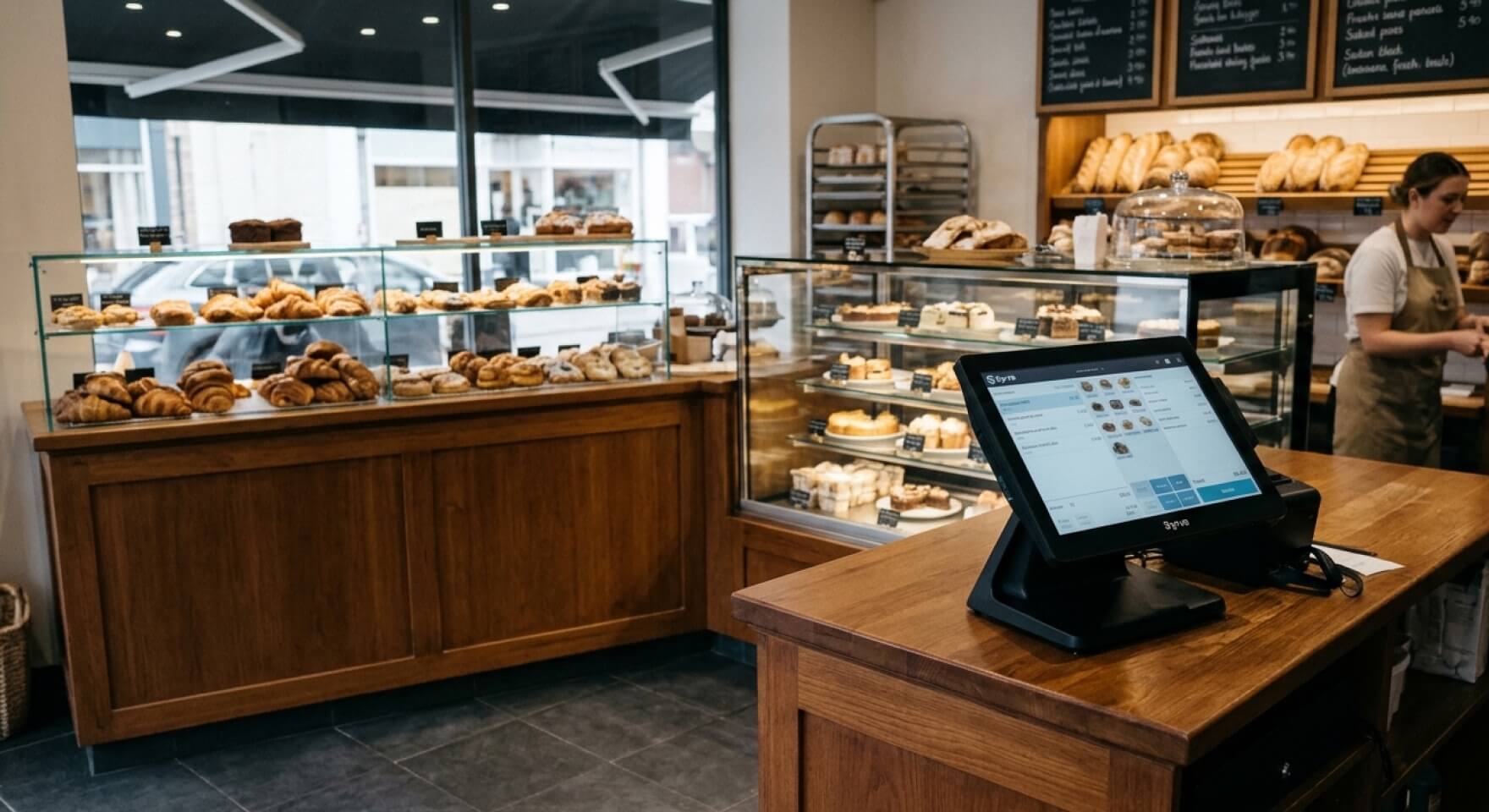
Bakery and pastry shop owners lose up to 15% of their margin due to unaccounted raw material balances between shifts, baking shrinkage, and evening pastry write-offs. A standard cash register does not see the movement of flour and butter at intermediate stages, so food cost constantly fluctuates. Professional bakery automation puts production on track for accurate calculation: every gram of ingredients is recorded in real time, expenses become predictable, and business profitability grows in the very first month of accounting.
Unlike a coffee shop, at an enterprise baking bread and confectionery products, the cycle lasts for days and covers several departments: the night workshop, decor, and showcase. Specialized automation for bakeries and niche establishments unites the workshop and the hall into a single circuit. Without this, bakery workflow automation stalls, and pastry shop accounting is kept in spreadsheets without understanding the real P&L.
Complex process automation requires nested recipe cards. A baker kneads 50 kg of dough according to a basic recipe, forms a batch of frozen croissant blanks, and adds filling, glaze, and packaging before serving. Compliance with baking technology at all stages works only when the software automatically breaks down the product into ingredients and writes them off during preparation.
From Restasystem’s practice: the biggest inventory discrepancies occur when transferring semi-finished items between shifts. When production accounting in a bakery is set up properly, each batch is recorded in the database. Reliable inventory accounting in a restaurant and cafe from scratch provides precise control of food components, identifies weak points in the workshop, and makes bakery accounting transparent.
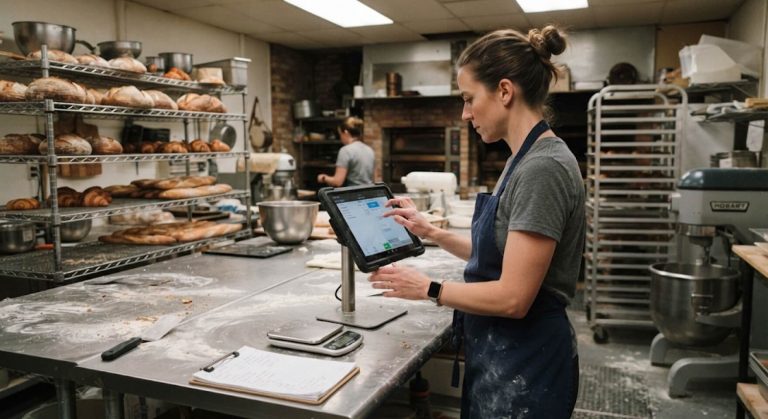
Instead of manually recounting bags of flour, the baker creates a production act in Syrve based on the actual output of finished products from the oven. The software independently calculates the consumption of components and deducts them from the balance. This automation system reduces employee routine time by two hours daily, increasing productivity. Even without the internet, the Syrve cash register operates autonomously, maintaining uninterrupted accounting.
Overproduction hits the margin just as hard as an empty showcase during peak hours. Analytical data from past weeks and sales dynamics show real demand. The system generates a needs analysis for raw material procurement and a re-baking schedule. The owner sees an ABC analysis of the assortment on a mobile dashboard on their phone, helping optimize processes to increase turnover speed and efficiency.
Baked goods have a short shelf life, so an evening strategy saves revenue. Automatic markdowns after 7:00 PM support customer loyalty and sell off discounted products. Yesterday’s croissants become almond croissants or rusks through a processing act, minimizing losses. To optimize losses, it is important to know the types of write-offs and proper documentation so as not to distort the report.
Designer cakes require recording an advance payment, pickup time, and decor. In the pastry shop interface, the manager places the order and processes the prepayment at the checkout. The software automatically calculates individual weight and filling parameters, and the assembly and serving task is displayed on time on the KDS kitchen screen. This allows automating complex orders and increasing business manageability.
Manufacturers often combine a retail showcase with B2B deliveries to coffee shops. Software integration with other systems allows managing retail and wholesale in a single database, separating price lists, invoices, and P&L. To control discrepancies between the workshop and shipments, an inventory in a cafe is conducted using electronic forms. This takes the enterprise to a new level and helps increase turnover.
In production, product weight changes at every step: dough loses moisture, the blank shrinks by 12–18% during baking, and trimmings remain when slicing sponge cake. If losses are not factored into the formula, the real cost of a dish will be underestimated. Accurate waste percentages for products ensure effective process management, reducing the risk of cash gaps and increasing margins to improve finances.
To make the right software choice, evaluate the benefits of automated systems for the scale of your outlet. A modern program for a mini-bakery works in the cloud, and on-site it is enough to install a POS terminal, scales, and a label printer. Such a bakery program unites the workshop and the hall, while SyrveWaiter speeds up table service. By choosing automation solutions and accounting software from Restasystem, you get transparent bakery accounting while optimizing costs.